Orkosi vs Replit Agent: a Replit Alternative for Building SaaS
Orkosi Team · · 8 min read
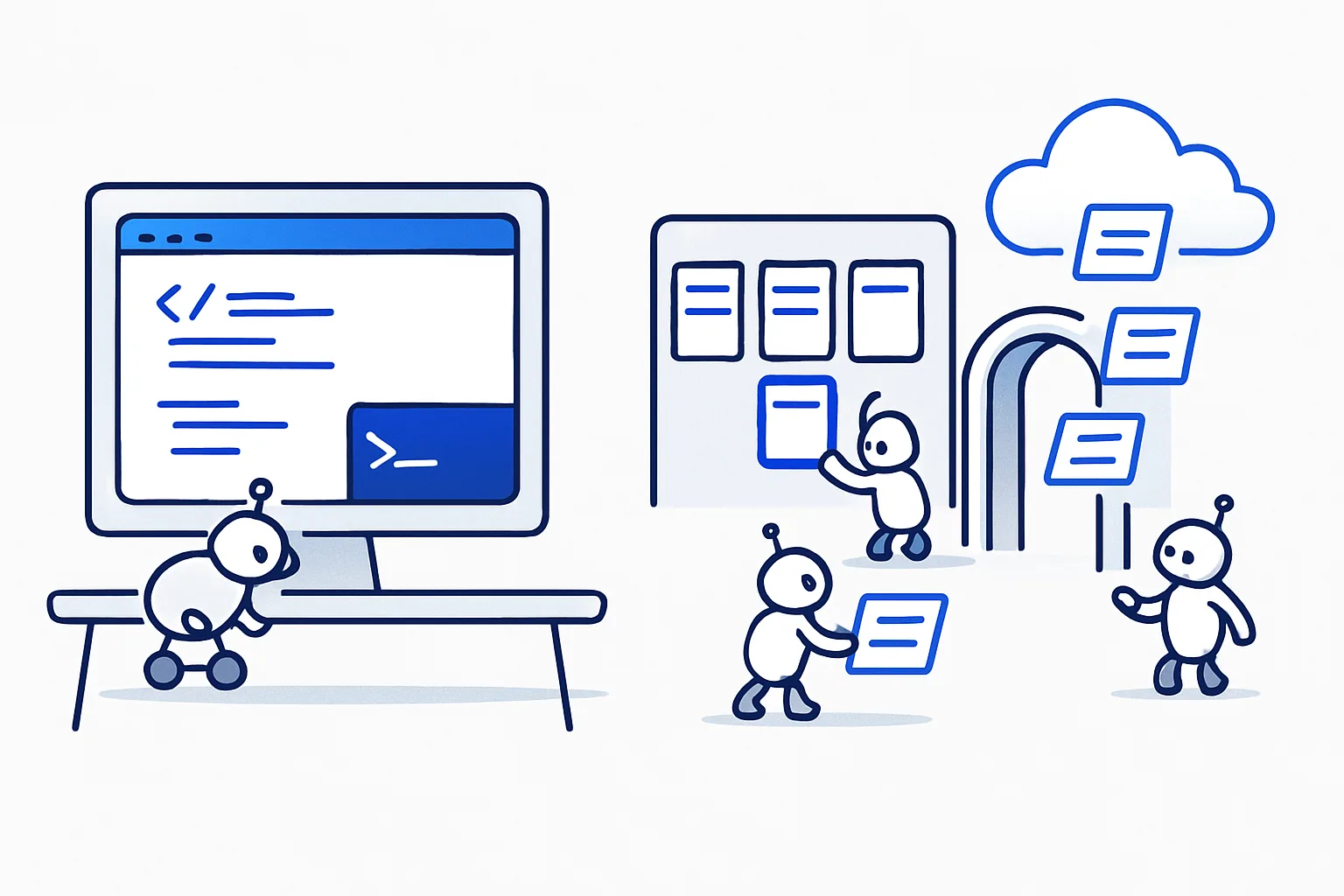
Pick Replit if you want one cloud workspace where you and an agent build, test and host an app together, and you expect to open the editor yourself. Pick Orkosi, the Replit alternative in this comparison, if you want the product owned by a pipeline instead: agents build each task, a reviewer checks it, tests run, and billing, a blog and a brand kit ship with the code. Replit is the stronger choice for a builder who codes. Orkosi is the stronger choice for a founder who wants a SaaS built and run for them.

What Replit Agent is
Replit is a cloud development environment: an editor, a terminal, hosting and a managed PostgreSQL database in the browser, with an agent that writes and edits code from a prompt. Its deployment docs describe publishing from the workspace, and its SQL database docs cover the database, which the public grid lists with separate development and production instances.
The agent can also test what it built in a browser, as its app testing docs describe. The grid rates that as partial: testing is usage-charged and there is no review gate between a change and a republish. Updating a live app means republishing from the editor.
Pricing on the Replit pricing page (checked 2026-10-08): $20/month, or $18 billed annually, for the Core plan; $100/month, or $90 billed annually, for the Pro plan; a custom price for the Enterprise plan; and pay-as-you-go usage beyond the monthly allowance. A free Starter tier is referenced in the deployment docs; it did not appear in the pricing page text.
What Orkosi is
Orkosi is a platform where a team of AI agents builds, deploys and runs a software product for a founder or small business. You describe the product in plain words; the agents write the code, deploy it on AWS with TLS and a custom domain, and keep improving it through tasks you approve.
There is no editor to open. A change is a task: you write it, an agent builds it, a reviewer agent checks it, automated tests run, and then it deploys. Every product lives in its own GitHub repository, has a dev and a production environment, and ships with a database, Stripe plans and subscriptions, a blog engine, a brand kit, email marketing and SEO tooling. The features page lists what is included; there is a free plan and the prices are on the pricing page.
Replit vs Orkosi feature by feature
The grid is the one on our Replit comparison page, checked on 2026-10-08. "Partly" means the capability exists with a limit, noted in the row.
| Capability | Replit | Orkosi |
|---|---|---|
| Writes application code from a brief | Yes | Yes |
| Agents keep working after launch through tasks | No, agent in the editor; republish to update | Yes |
| Automated tests and a review gate before a change ships | Partly, agent browser testing, usage-charged; no gate | Yes |
| Dev and production environments | Yes, development and production databases | Yes |
| Hosting, TLS and a custom domain | Yes | Yes |
| Database included | Yes, managed PostgreSQL | Yes |
| Code in your own GitHub repository | Partly, GitHub source control connection | Yes |
| Plans, credits and subscriptions built in (Stripe) | Partly, Stripe integration on request | Yes |
| Blog engine and brand kit | No | Yes |
| Mobile apps | Partly, Expo with guided TestFlight | Partly, Expo apps generated; store submission planned |
| Team collaboration | Yes, up to 15 collaborators on Pro | Yes |
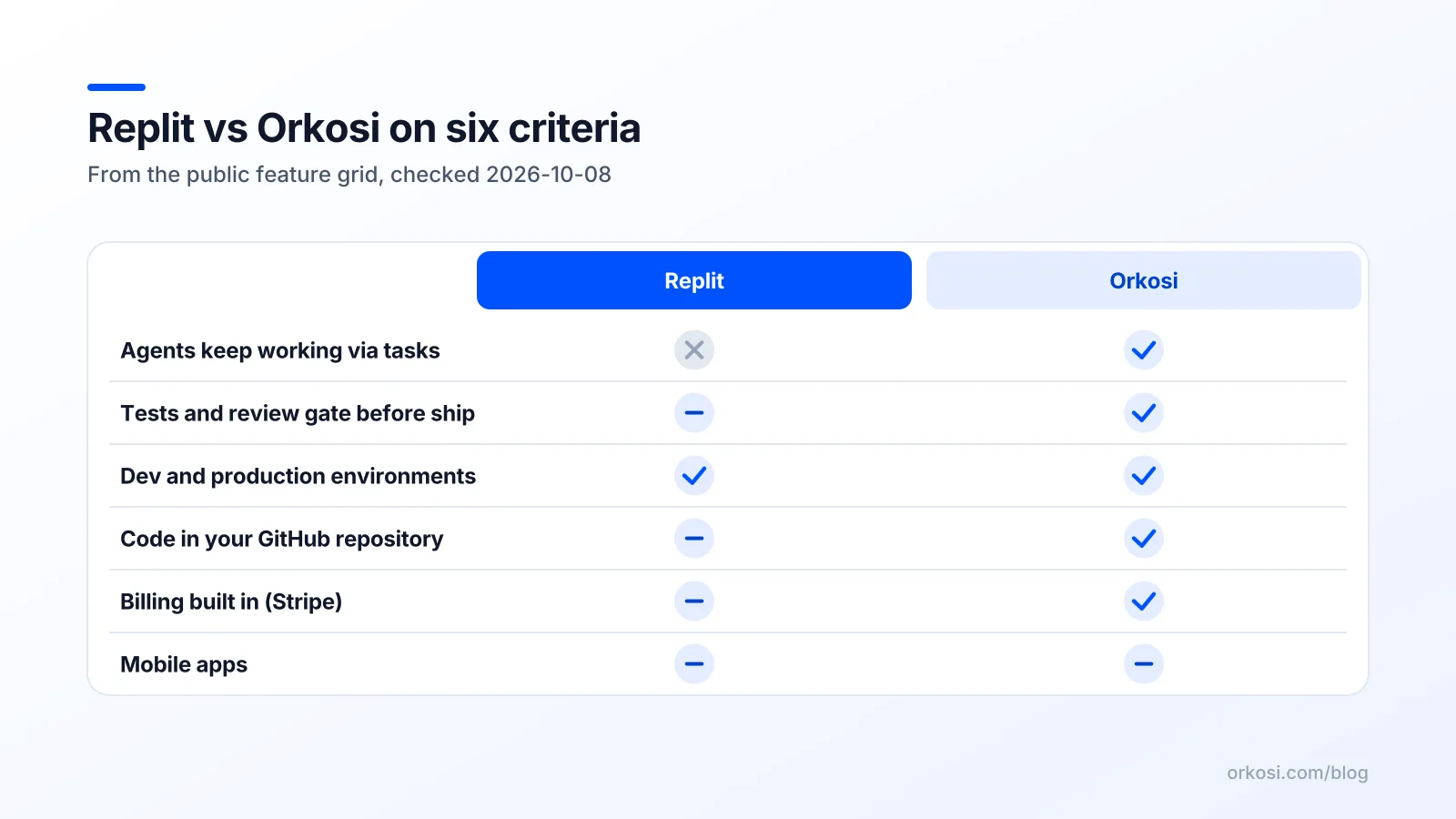
Replit is the closest of the chat-era tools to Orkosi on infrastructure. It has real dev and production environments, a managed database and hosting, and these are full ticks. Where it differs is in who does the work: on Replit the agent assists you in an editor you are expected to use; on Orkosi the agents do the work on a board you supervise, and a reviewer checks it before it ships.
Pricing with sources
Replit (vendor pricing page, checked 2026-10-08): $0/month for the Starter tier, which is named in the docs rather than on the pricing page; $20/month, or $18 billed annually, for the Core plan; $100/month, or $90 billed annually, for the Pro plan; the Enterprise price is not public. Usage beyond the monthly allowance is pay-as-you-go. Source: replit.com/pricing.
Orkosi has a free plan. The plans and credit prices are on the pricing page and are not quoted here, because they are set in the product rather than in an article.
Two things stand out in the Replit model. First, the jump from Core to Pro is five times the price, and the grid's collaboration note (up to 15 collaborators on Pro) suggests Pro is where teams land. Second, usage beyond the allowance is metered, including the agent's browser testing, so a product that changes often has a variable bill. Stripe's own transaction fees apply to both tools and are on the Stripe pricing page.
Where Replit leads
An honest Replit alternative article has to say where Replit is the better choice, and the list is longer than for most chat builders.
It is a real workspace. If you can code, or want to learn, Replit gives you the editor, the terminal and the agent in one place. Orkosi gives you a task board and a repository; it is not an IDE and does not try to be one.
Environments are a full tick. Development and production databases are separate on Replit, which puts it level with Orkosi on a row where most chat builders are partial.
Mobile is further along today. The grid lists Expo with guided TestFlight for Replit. Orkosi generates Expo apps and has store submission planned. Both are partial, but on the path to a store listing Replit is ahead right now.
The agent tests its own work. Agent browser testing is usage-charged and there is no gate, so the grid rates it partial, but it is more than the nothing most chat builders offer.
Collaboration is explicit. Up to 15 collaborators on Pro is a clear, published number.
Where Orkosi leads
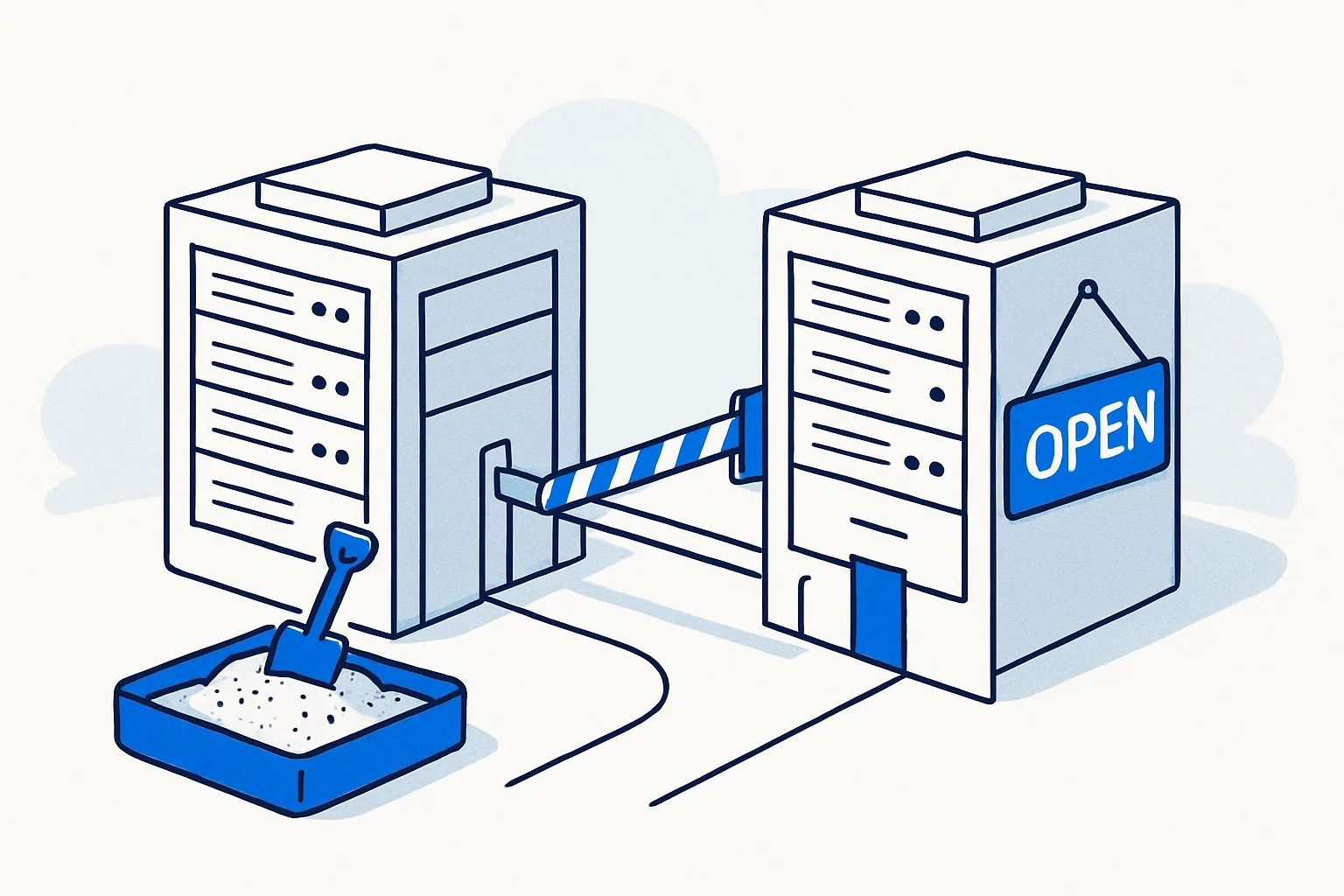
Agents keep working through tasks. On Replit, the agent helps when you are in the editor and a change goes live when you republish. On Orkosi, a task ("add a CSV export to the Billing page") is picked up by an agent, built, reviewed and deployed without you opening anything. Work continues whether or not you are at the keyboard.
A review gate before production. Automated tests and a review step run on every change. Replit's agent can test in a browser, but nothing stands between a change and a republish. For a product with paying customers, the gate is the point.
Billing is built in, not requested. Plans, credits and subscriptions through Stripe are part of every Orkosi product. On Replit the grid lists a Stripe integration on request.
Code ownership is a full tick. Every Orkosi product lives in its own GitHub repository from the start. Replit offers a GitHub source control connection, which the grid rates partial.
The business layer is included. A blog engine, a brand kit, email marketing and SEO tooling ship with each product. On Replit these are things you build in the workspace or bolt on.
Who should pick which Replit alternative
Take a concrete case: a solo founder launching a subscription tool that helps small accountancy practices chase late invoices.
On Replit, she opens the workspace, prompts the agent, inspects what it built in the editor, and publishes for $20/month on the Core plan (vendor page, checked 2026-10-08). When a practice asks for a reminder schedule, she returns to the editor, prompts again, tests, and republishes. If she can read the code, she can also fix it herself, which is a real advantage.
On Orkosi, she writes a brief, the agents build the tool with subscriptions wired to Stripe, and each practice's request becomes a task. An agent builds it, a reviewer checks it, tests run, and it deploys to production after proving itself in dev. She pays for a plan on the pricing page and never opens an editor.
The split:
- Choose Replit if you are a builder who wants an all-in-one cloud workspace to build, test and host an app with an agent, and you expect to be in the editor. Developers, learners, technical founders and anyone who wants to read the code as it is written fit.
- Choose Orkosi if you are a founder who wants the product owned by a pipeline, with tasks, a review gate and the business layer included, and no editor in your week. Paid SaaS products run by non-technical founders fit.
- Consider both if you have a developer who likes a workspace and a founder who wants a board. The comparison hub covers the other tools on the usual shortlist, and the docs explain how an Orkosi build starts.
Replit is a trademark of its owner; Orkosi is not affiliated with it.
FAQ
Is Orkosi a Replit alternative if I cannot code?
Yes, and that is the clearest case for it. Replit is a workspace that expects you to open the editor, even with an agent helping. Orkosi is a task board: you describe the change, an agent builds it, a reviewer checks it and it deploys. You never need to read the code, though it is in your repository if a developer joins later.
Does Replit have separate dev and production environments?
Yes. The public grid gives Replit a full tick for development and production databases, the same as Orkosi. The difference is what happens on the way from one to the other: Orkosi runs automated tests and a review gate, Replit republishes from the editor.
Which is cheaper?
Replit charges $20/month for the Core plan, or $18 billed annually, with usage beyond the allowance metered (vendor page, checked 2026-10-08). Orkosi has a free plan and the paid plans are on the pricing page. For a product that changes often, compare the metered usage on one side against the credits on the other, plus your own hours.
Which is better for a mobile app?
Today, Replit: the grid lists Expo with guided TestFlight. Orkosi generates Expo apps and has app-store submission planned. Both carry a partial rating, and if a store listing is your first milestone, weigh that row heavily.
Ready to hand the build to a team of agents? Start on the free plan, then compare plans on the pricing page once you know how often the product will change.